What concrete removal in Adelaide can include
When you are ready to clear old concrete, the first step is working out what needs to go and what should remain. The job may involve a single path or driveway, or a slab alongside other demolition and site-clearing work. In Adelaide, concrete removal can also include loading and removing the broken material, so it helps to discuss the whole work area rather than the slab alone.
Driveways, paths and outdoor concrete
An old driveway or concrete path can be removed when it is damaged, no longer suits the layout, or needs to make way for a new surface or landscaping. The scope depends on where the concrete starts and ends, and whether adjoining surfaces need to stay in place. If you are planning driveway removal or concrete path removal, point out any edges, steps or nearby features that should be protected or left undisturbed.
House slabs, shed floors and garage floors
Concrete slab removal may involve a house slab, an old shed floor or a garage floor. Slab dimensions, thickness and reinforcement can affect how the work is approached, while the intended use of the area afterward helps clarify what needs to be cleared. Describe whether the whole slab is being removed or only a defined section, and note any structures that are staying.
Related demolition, site clearing and rubble removal
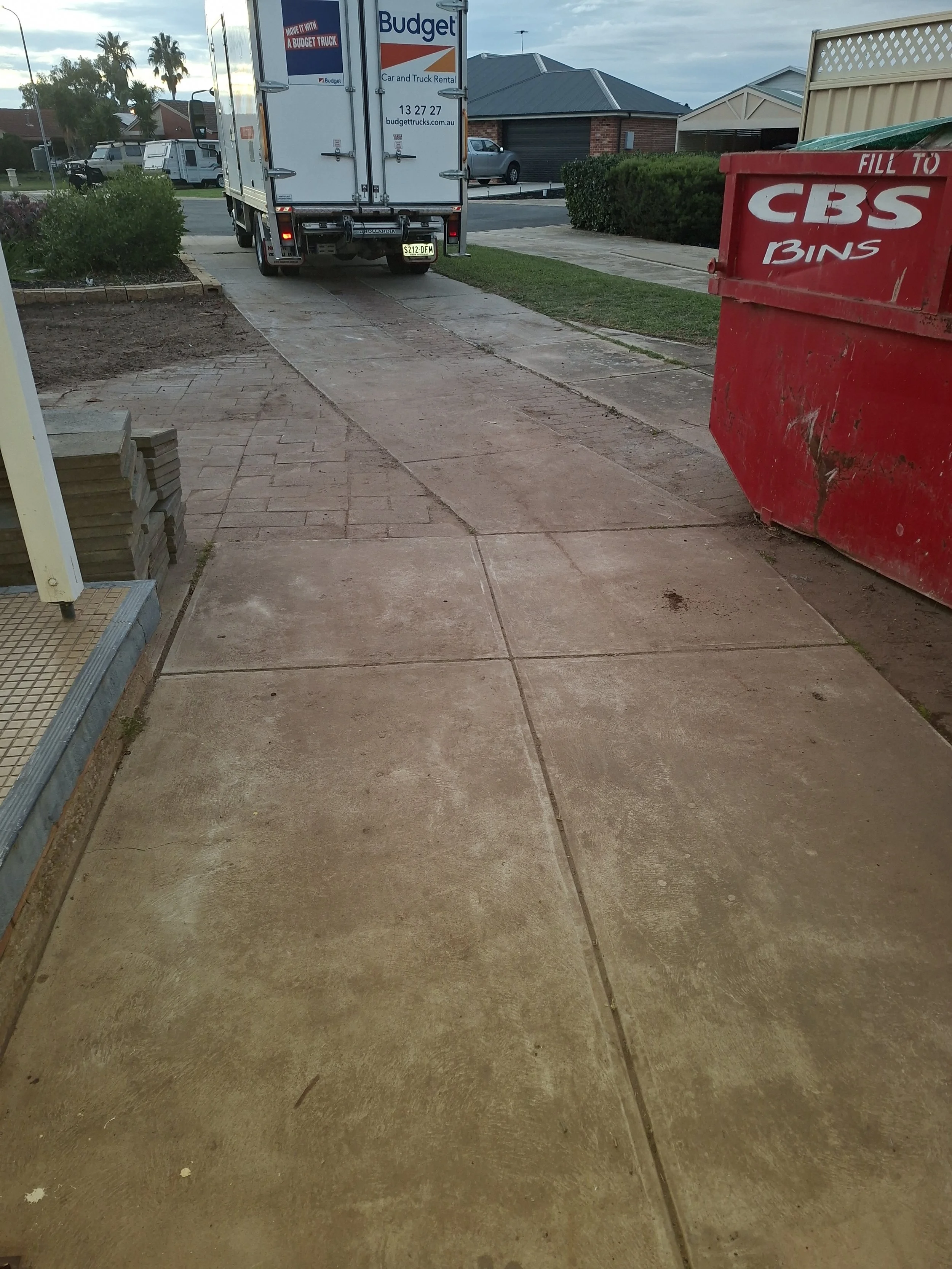
Removing an entire concrete driveway can be a massive job, especially without the right equipment. For larger areas, it’s best to explore hiring a large heavy fill or concrete skip bin.
Some projects combine concrete demolition and removal with related work, such as taking down a garage or shed, clearing a site, or removing rubble and levelling soil after demolition. TJR Construction Adelaide lists concrete removal and slab demolition, garage and shed demolition, site clearing and preparation, and rubble removal and soil levelling among its services. The demolition services page sets out the work listed, so you can check whether your planned scope fits.
What to check before requesting concrete removal
A useful quote starts with a clear picture of the concrete and its surroundings. You do not need to investigate the slab yourself; share what you already know and flag anything uncertain for discussion. A few details about thickness, reinforcement and services can help the contractor understand what needs to be considered at the site.
Slab size, thickness and condition
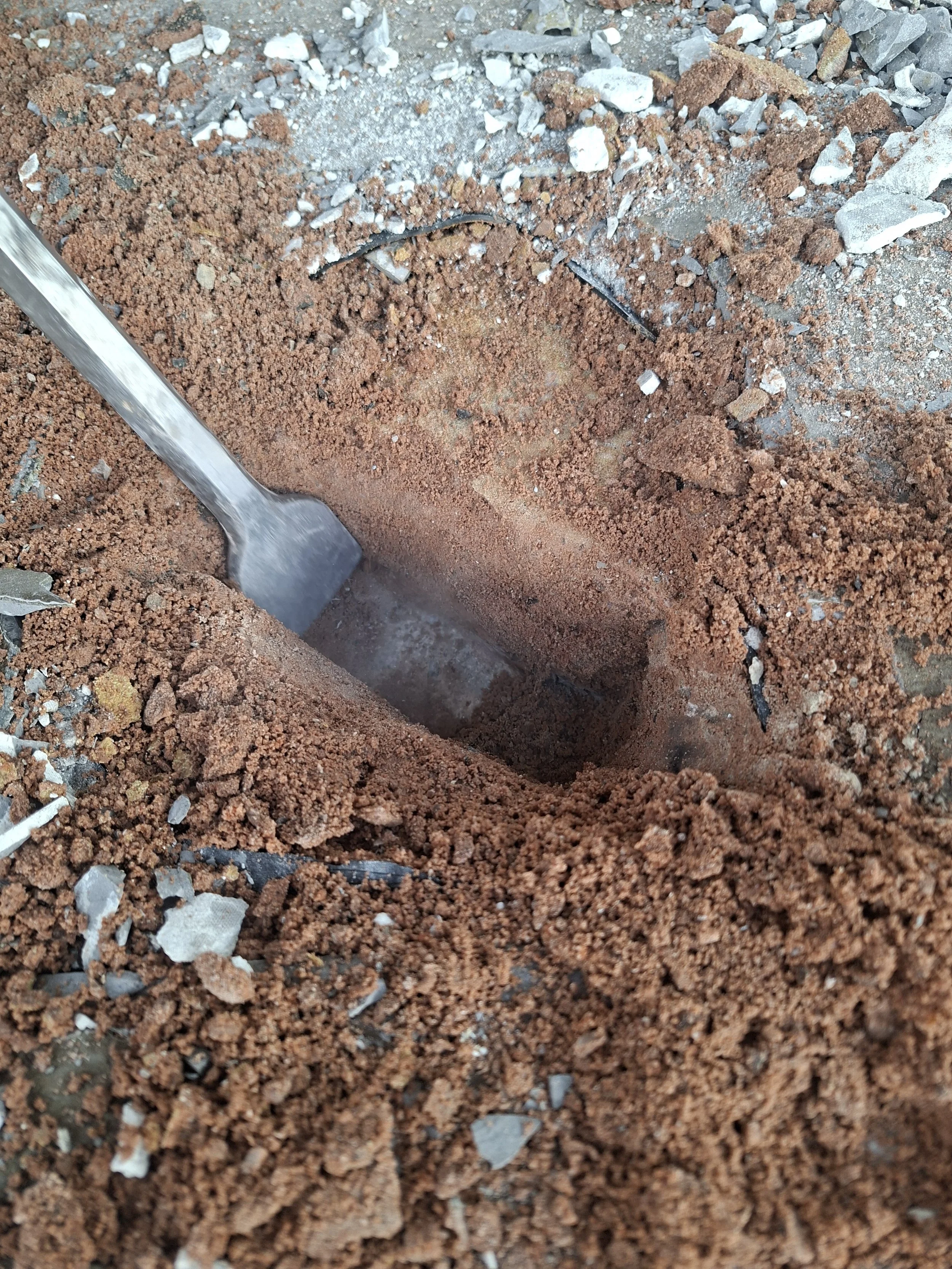
Sometimes your project can be met with unexpected surprises - like an additional concrete base beneath the one you’re trying to remove.
Measure the approximate length and width if you can do so safely, and note whether the concrete is in one continuous area or several sections. If you know how thick it is, include that information; otherwise, say that it is unknown. Cracks, uneven sections and previous patching can also be useful context, but they do not replace an assessment of the actual site.
Reinforcing steel and other embedded materials
Reinforcing steel can change how concrete needs to be broken up and handled. If you have plans, records or clear knowledge of reinforcement or other materials within the slab, share those details when requesting a quote. Avoid making assumptions from the surface alone; where something is uncertain, identify it as uncertain so it can be discussed before work is planned.
Electricity, gas and water services that may need to be isolated
Services near or beneath concrete need to be considered before demolition begins. The SafeWork SA's Demolition Work Code of Practice says service lines, including electricity, gas and water, that are not needed for the work should be shut off, capped or controlled before demolition, and the utility notified in advance. Tell the contractor what you know about service locations, and confirm who is responsible for arranging any required controls.
How site access and surroundings affect the work
The work area is only part of the picture; the route to it matters as well. Machinery, trucks and loading need enough usable space, while neighbouring structures and shared areas may call for careful planning. Include access constraints in your first conversation so the quote can reflect the real site, not an assumed one.
Space for machinery, trucks and loading
Describe the route from the street to the concrete, including gates, narrow passages, slopes and any overhead restrictions you know about. Note where a truck might be able to stop and whether access is shared with neighbours or other users. These details help establish what equipment and loading arrangements may be suitable without assuming that every site can be approached in the same way.
Nearby buildings, fences, gardens and shared access
Point out the features close to the concrete that are staying: house walls, fences, garden beds, trees, paving or neighbouring property. Mention shared driveways and access paths, too, so the working area and any restrictions are clear. A photograph can show the relationship between the slab and its surroundings more clearly than a short description alone.
Ground conditions, levels and any protection needed
Tell the contractor about soft, sloping or uneven ground along the access route or around the slab, if you know of it. Also explain whether nearby surfaces, gardens or access ways need particular care. These conditions can affect how work is planned and what needs to be included in the agreed scope, so raise them before the quote is finalised.
What shapes a concrete removal quote
A quote reflects the particular job rather than just the visible area of concrete. The amount to remove, the material and reinforcement, access and the handling of waste all contribute to the scope. That is why a general estimate cannot account for what is actually present at your site.
The size and complexity of the job
The area and thickness of the concrete help describe the volume of work, while the shape and layout can add complexity. A single open slab is different from separate sections beside structures or surfaces that need to remain. Give the contractor the clearest available measurements and explain any boundaries that are important to the job.
Concrete type, reinforcement and breaking requirements
The concrete’s condition and any reinforcing steel can influence the work needed to break it up. If the slab has unusual features or you have information about what is within it, include that when discussing the job. For TJR Construction Adelaide, demolition costs depend on the size of the job, materials, accessibility and waste removal requirements; the specific site details help establish how those factors apply.
Access, labour, equipment and waste removal
Access can affect the equipment and loading arrangements needed, while the work area and amount of material influence the labour involved. Waste removal requirements are another part of the scope, so clarify whether the broken concrete is to be taken away and what is expected of the site afterward. Considering these points together gives you a more useful basis for comparing quotes than looking at slab dimensions alone.
What to expect during removal and site clean-up
Once the scope is clear, the work can be planned around the slab, access and surrounding features. Before demolition starts, service controls and the agreed work area need to be understood. The final handover should also be discussed in advance, so you know what removal and clean-up are included.
Planning the demolition and confirming service controls
The contractor needs to understand what is being removed, what will remain and how the work area can be accessed. Make sure known service locations and any isolation arrangements are raised before work begins. If you are unsure whether approval may be needed, check with PlanSA or your council rather than making an assumption.
Breaking up, loading and disposing of concrete
Concrete is broken into manageable material for loading and removal as set out in the agreed scope. How that happens can depend on the slab, reinforcement and available access. Confirm what waste removal includes and whether any other construction or building material is part of the job, so there is a shared understanding of what will leave the site.
Rubble removal, soil levelling and the agreed site handover
After the concrete is removed, the agreed finish might include rubble removal or soil levelling, depending on the job. TJR Construction Adelaide lists removal and dumping of construction and building material, as well as rubble removal and soil levelling after demolition. Confirm what condition the area will be left in and whether further preparation is outside the quoted scope, particularly if another surface or structure is planned.
How to prepare for a quote and compare contractors
A clear request makes it easier to discuss the actual work and compare what each scope includes. Gather the basic site details, share any known service or access constraints, and be direct about what you want removed and what should remain. If the site is difficult to describe remotely, arrange a conversation about the job before deciding what is included.
Photos, measurements and site details to gather
Take photos that show the full slab, its edges and the route to the work area, and note approximate dimensions if available. Add what you know about thickness, reinforcement, nearby services and access restrictions, making clear where details are uncertain. You can request a site discussion to talk through the job; the team makes contact, arranges a time to discuss it and provides a custom quote.
Questions to ask about disposal, access and the finished site
Ask what concrete and other material the scope includes removing, how access and loading are accounted for, and what the site will look like at handover. Check whether rubble removal and soil levelling are included or need to be considered separately. A quote based on the actual site gives you a clearer way to compare scope, rather than relying on a broad estimate that cannot account for site-specific conditions.
Review TJR Construction Adelaide’s demolition services
Check the listed demolition work against your plans, including concrete removal and slab demolition or related site-clearing work. This can help you describe the scope you want discussed when you contact the team.
Request a site discussion and custom quote
If you are ready to have old concrete removed, send through the site details and ask TJR to discuss the job and provide a custom quote.